
Managed SOC (24/7 threat monitoring) India
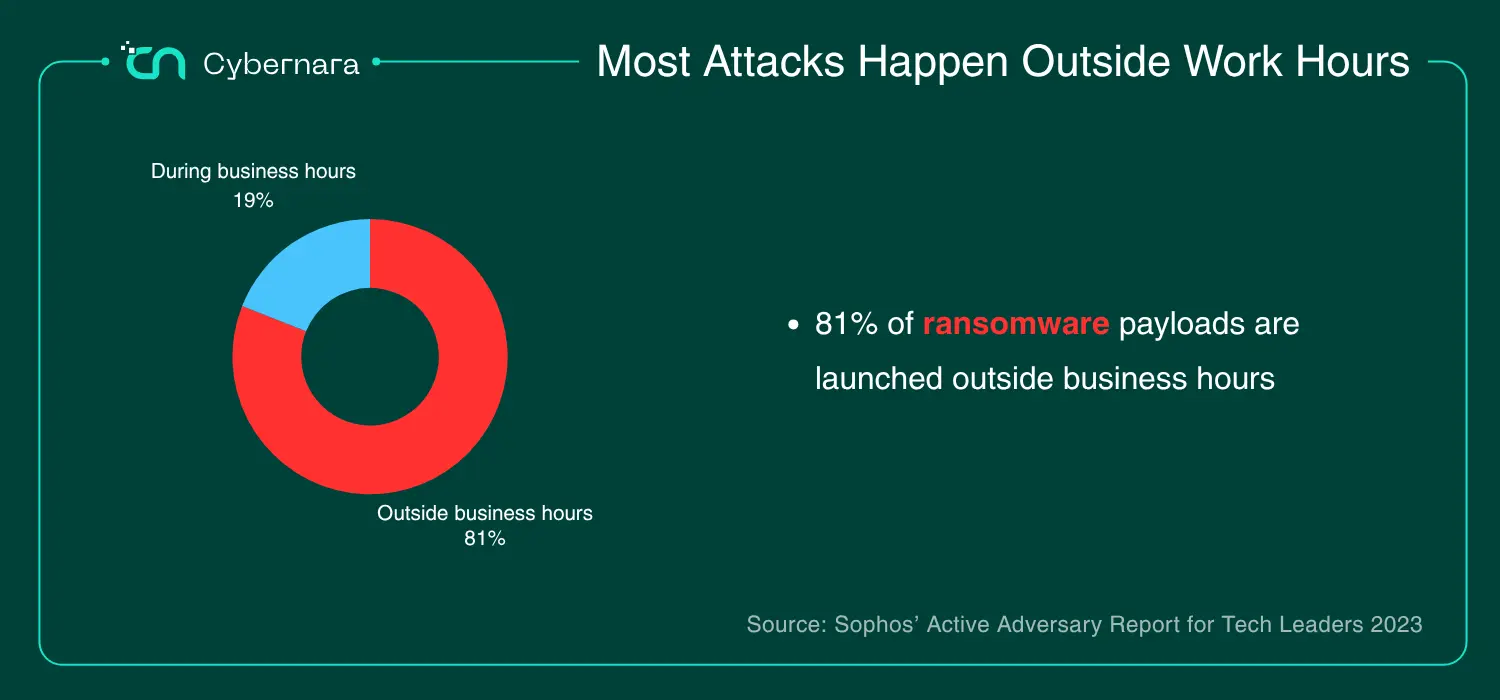
Most Attacks Happen Outside Work Hours
Most ransomware starts after hours, when no one is there to react. Continuous monitoring ensures threats are caught at the exact moment they begin, not the next morning.
Why Indian Companies Struggle in the Absence of 24/7 SOC
When an organization operates without continuous monitoring, security gaps build silently across systems, devices, and identities. Most threats don’t strike during business hours, they appear in the quiet periods when no one is watching.
These are the core areas where companies face the highest risks without a round-the-clock SOC:
Overnight and Off-Hour Attacks — 30% Risk
Most cyberattacks begin late at night, on weekends, or during holidays when teams are offline. Unauthorized logins, privilege misuse, or suspicious API calls go undetected for hours, allowing attackers to move deeper into the network. With no one monitoring these signals in real time, organizations typically discover breaches only after the damage is done.
Missed Early Indicators — 25% Risk
Small anomalies — failed MFA attempts, unusual traffic, dormant accounts becoming active — are often missed without continuous analysis. These early indicators are critical because they precede major attacks like ransomware or credential compromise. Without a SOC correlating these events, minor warnings grow into full-scale incidents.
Long Dwell Time for Attackers — 35% Risk
If an attacker gains access at 2 AM and there is no monitoring, they get hours of unrestricted activity. This window enables lateral movement, data extraction, and tampering with logs or defenses. Extended dwell time is one of the main reasons breaches escalate into major business disruptions.
Alert Fatigue on Internal Teams — 15% Risk
Without a SOC filtering alerts, all notifications flow directly to IT teams. This leads to overload, ignored warnings, and slow response times. Critical alerts lose visibility within thousands of false positives, making real threats easy to overlook.
Unmonitored Cloud & Identity Activity — 20% Risk
Cloud environments and identity systems change constantly. After-hours API usage, abnormal access patterns, or misconfigurations often go unnoticed without 24/7 oversight. Identity-driven attacks succeed largely because organizations do not track authentication behavior in real time.
Slow Incident Detection and Delayed Response — 40% Risk
Without continuous monitoring, organizations detect issues only when systems malfunction or customers report irregularities. This reactive posture turns containable incidents into prolonged outages. The lack of immediate response capability is one of the biggest contributors to breach severity.
A SOC reduces the impact window, preserving uptime and limiting business interruption.
Real Incidents That Prove 24/7 SOC Is Essential
Capital One (2019)
Equifax (2017)
Colonial Pipeline (2021)
Uber (2022)
MOVEit Transfer Zero-Day (2023)
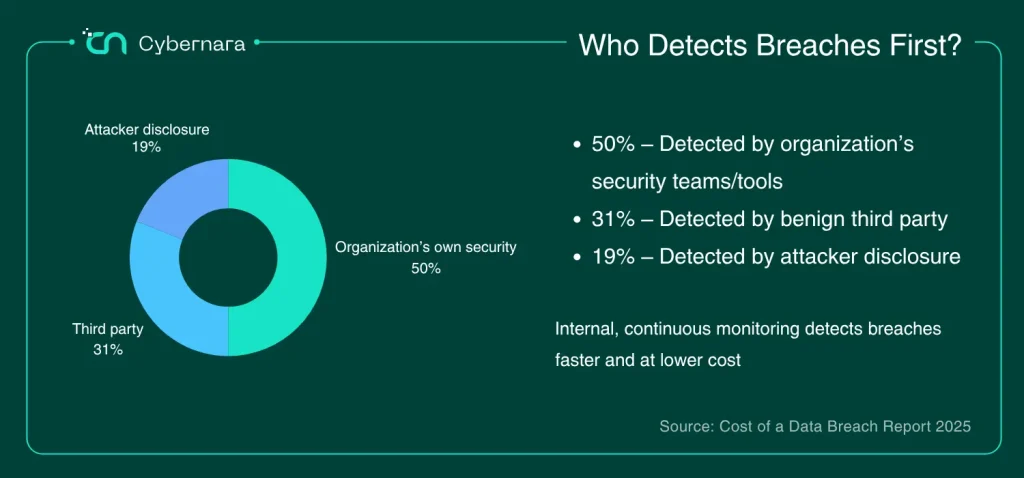
Who Detects Breaches First?
Organizations that detect breaches internally react faster, limit the damage, and reduce overall recovery costs. When your own monitoring catches an attack early, you control the timeline — not the attacker. A 24/7 SOC closes the gap, ensuring threats are found before they turn into expensive incidents.
Clients Who Trust Us







What Our Managed SOC Covers
Identity and Access Activity
Endpoints and Employee Devices
Servers and Critical Infrastructure
Cloud Environments
Network Traffic and Communication Patterns
Web Applications and APIs
How We Ensure Zero Disruption When Running Your SOC in India
A Managed SOC must strengthen your security without interrupting daily operations. Our approach is designed to integrate seamlessly with your systems, maintain uptime, and ensure that monitoring never interferes with business activity. Every part of our deployment and operations strategy is built around stability, safety, and continuity.
Pre-Deployment Planning and Environment Study
Before enabling monitoring, we work closely with your IT, cloud, or DevOps teams to understand how your systems operate, when workloads peak, and which areas require special attention. This planning ensures that sensors, log collectors, and integrations are deployed without affecting your applications, cloud resources, or network performance.
Read-Only and Non-Intrusive Monitoring
Our SOC operates in a fully read-only mode during visibility, discovery, and analysis. We collect logs, examine traffic, and analyze behavior without changing or modifying any production systems. Your environment continues operating exactly as it normally does, with zero impact on performance or availability.
Staged Integration of Log Sources
We connect SIEM, EDR, XDR, firewalls, cloud services, and identity providers through a phased onboarding model. Each source is added gradually, tested, and verified to maintain system stability. This controlled approach prevents sudden load changes and ensures smooth adoption of continuous monitoring.
Careful Tuning to Reduce Alert Noise
We refine correlation rules and detection logic to eliminate false positives before full activation. This prevents unnecessary alerting, reduces overhead for your teams, and creates a clean, accurate monitoring baseline. Proper tuning also ensures that the SOC supports operations rather than distracting from them.
Testing All Monitoring Components Before Go-Live
Every integration — log ingestion, alert routing, detection rules, reporting workflows — is tested in isolation and then validated together. This ensures that monitoring runs smoothly across your infrastructure without causing network delays, system conflicts, or performance degradation.
Zero Changes Without Approval
We do not modify configurations, policies, or security controls unless your team explicitly approves. Every recommendation is reviewed with your internal stakeholders, ensuring complete transparency and shared control of your security posture.
Services Our Clients Trust Us With
Protect Your Data, People & Business From Threat Attacks
Get Started With A Free Security Audit
FAQs
Do we really need a SOC if we already have security tools?
Tools generate alerts, but they don’t investigate, respond, or connect the dots across your environment. A SOC turns noise into clarity by actively analysing events, spotting unusual behaviour, and responding before an attacker gains control.
How fast does Cybernara respond to critical threats?
Instantly. High-severity alerts are escalated and contained as soon as they’re detected. Lower-risk issues follow your approved response workflow, so you stay in control while staying protected.
What kind of threats does the SOC detect?
Everything from identity misuse and malware activity to suspicious cloud behaviour, lateral movement, privilege escalation, and data exfiltration attempts. If something looks abnormal, we see it
Can you monitor cloud environments like AWS, Azure, and Google Cloud?
Yes. Our SOC covers identity activity, configuration changes, API usage, service deployments, and access logs across all major cloud platforms.