
Risk Management and vCISO Support
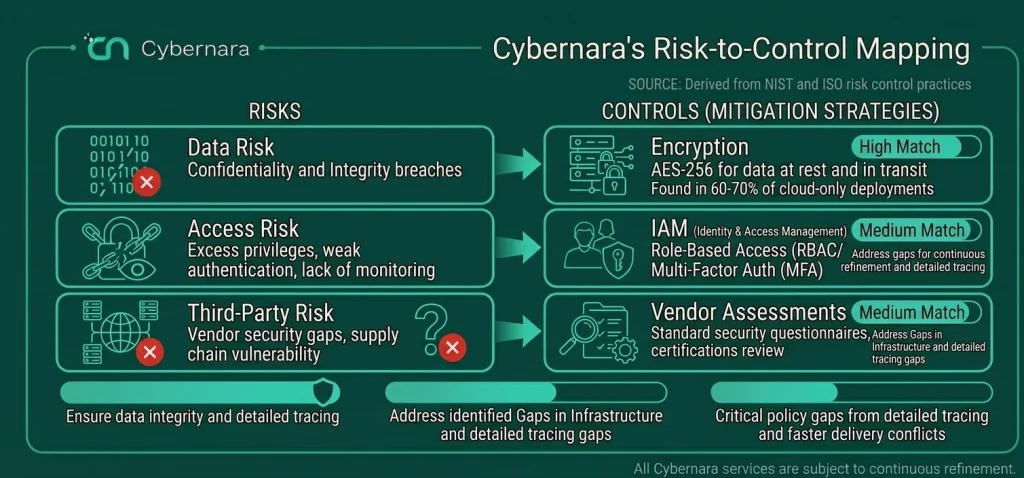
Cybernara's Risk to Control Mapping
When Security Risks Are Not Clearly Defined or Prioritized
Security issues don’t always come from major failures. They come from risks that are not identified, understood, or prioritized properly.
No Clear View of Risk Across the Environment
Risks exist across systems, users, and processes but are not documented or tracked. This makes it difficult to understand where attention is needed.
Everything Feels Equally Urgent
Without prioritization, all issues appear critical. Teams struggle to focus on what actually matters.
Reactive Decision-Making
Actions are taken only after incidents occur. This leads to repeated issues and higher impact over time.
Unaddressed High-Risk
Areas Critical vulnerabilities remain unresolved because they are not identified or escalated properly. This increases exposure.
Lack of Ownership and Accountability
No one is clearly responsible for managing specific risks. This leads to delays and gaps in response.
No Alignment With Business Impact
Risks are not evaluated based on business impact. This results in misaligned priorities and ineffective decisions.
The Systems, Processes, and Decisions Behind Security Risk
Technology and System Configurations
User Behavior and Access Management
Operational Processes and Workflows
Third-Party and Vendor Dependencies
Policy and Governance Frameworks
Business Decisions and Risk Trade-Offs
Clients Who Trust Us







How Cybernara Provides Strategic Security Leadership
Comprehensive Risk Assessment and Visibility
Risk Prioritization Based on Impact
Security Strategy and Roadmap Development
Policy and Governance Implementation
Executive-Level Reporting and Guidance
How We Organize and Strengthen Security Programs
A strong security program is built through clear governance, consistent processes, and continuous improvement. Our approach focuses on making security structured, measurable, and practical to manage across the organization.
Defined Security Frameworks and Processes
We establish clear frameworks, policies, and operational processes that guide how security is managed across teams and systems. This reduces ambiguity and improves consistency in execution.
Centralized Risk Management
Security risks are identified, documented, tracked, and reviewed through a centralized process. This improves visibility and helps ensure important risks are addressed before they escalate.
Alignment Across Teams and Business Functions
Security practices are applied consistently across departments, technologies, and operational workflows. This improves coordination, reduces silos, and minimizes gaps in coverage.
Clear Ownership and Accountability
Roles and responsibilities are clearly defined for different areas of security management. This strengthens accountability and helps improve response efficiency during operational or security events.
Measurable Metrics and Reporting
Security performance is monitored through defined metrics, reporting structures, and operational reviews. This provides leadership with visibility into progress, effectiveness, and areas requiring improvement.
Continuous Review and Optimization
Security programs are regularly reviewed and updated based on evolving threats, business changes, technology adoption, and operational requirements. Continuous improvement helps ensure the program remains effective and aligned with organizational needs over time.
Services Our Clients Trust Us With
Our Core Services
IT and Infrastructure Services
Cloud and Platform Services
Security and Compliance Services
Development, Data and AI Services
Protect Your Data, People & Business From Threat Attacks
Get Started With A Free Security Audit
FAQs
What does vCISO support include?
It includes risk assessment, security strategy, policy development, compliance alignment, and ongoing guidance — all delivered without needing a full-time CISO.
How is this different from regular security services?
This focuses on strategy, governance, and decision-making. It connects all security efforts under a clear plan instead of isolated activities.
Do we need a vCISO if we already have an IT team?
Yes. A vCISO works alongside your IT team to provide direction, prioritize risks, and ensure security aligns with business goals.
Who handles implementation of recommendations?
Cybernara can support implementation or guide your internal teams. The approach is flexible based on your setup.