
Web & Application Security Assessment
Our Web & Application Security Assessment Services Are global and Available In Multiple Countries
Top Vulnerability Categories Detected During Assessments
Your website and apps are the front line of your digital business — and also the most targeted. This assessment uncovers vulnerabilities across your code, APIs, and configurations through real-world testing, ensuring attackers can’t turn small bugs into big breaches.
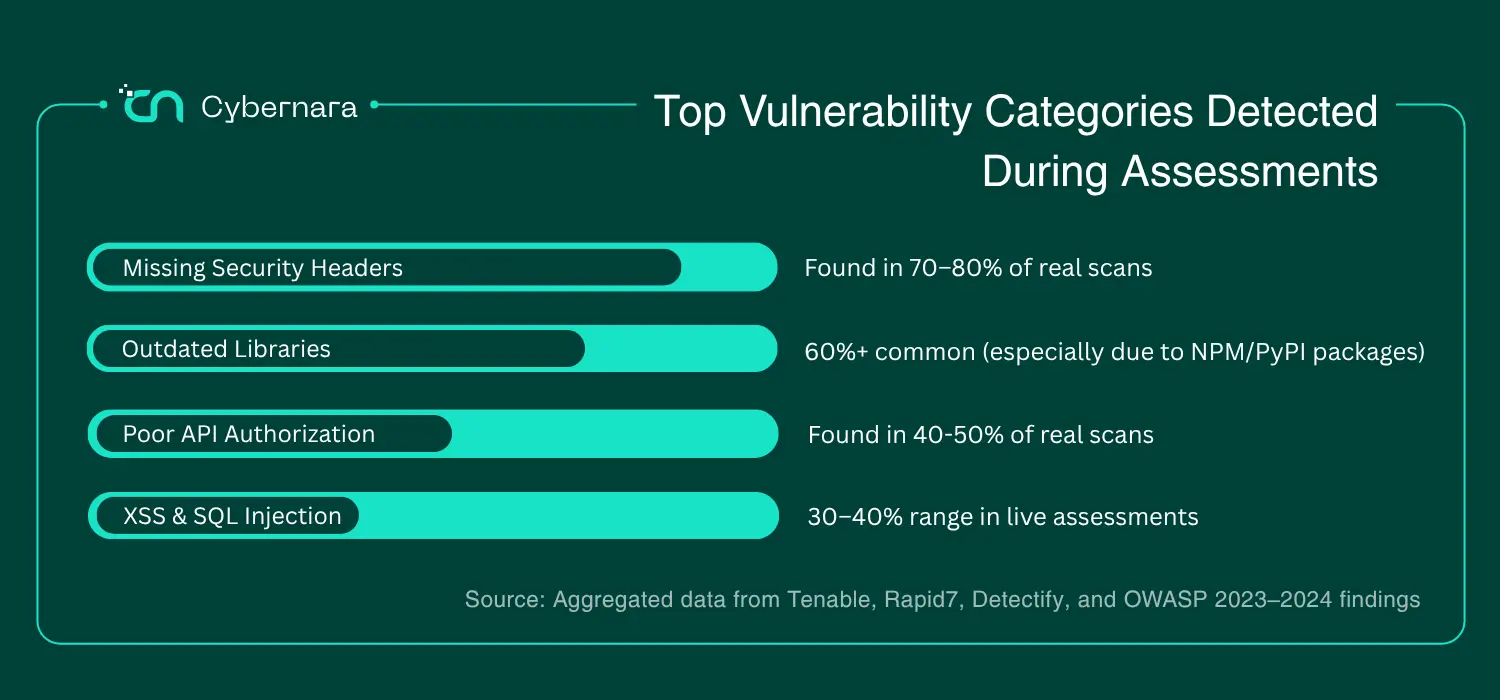
A List of What We Examine During the Assessment
Web & Application Security Assessments go beyond vulnerability scans, they trace how applications behave, interact, and protect data in real conditions. They focus on what slips through in busy deployment cycles and what quietly erodes defenses over time.
Here’s what they often bring to light:
Access and Authentication Logic
Where user verification fails — from weak password rules to tokens that never expire.
These small oversights often open large doors.
Input and Data Validation
Code that trusts what users send it.
Unchecked inputs turn into injection flaws, data leaks, and corrupted sessions.
API and Integration Controls
Where internal and third-party systems meet but don’t verify each other’s identity.
APIs built for speed often trade away security consistency.
Configuration and Header Management
Missing CSP or HSTS headers, open admin panels, or default settings left unchanged.
Most breaches start not from code but from configuration.
Dependency Hygiene
Outdated libraries or untracked plugins that quietly introduce known exploits.
Security depends as much on what you build as on what you reuse.
Common Vulnerabilities We Still See in 2025
Missing Security Headers
Outdated Components
Weak API Authorization
Injection and Input Flaws
Misconfigured Cloud and Certificates
These findings don’t signal carelessness, they reflect how quickly digital ecosystems evolve and how slowly maintenance catches up.
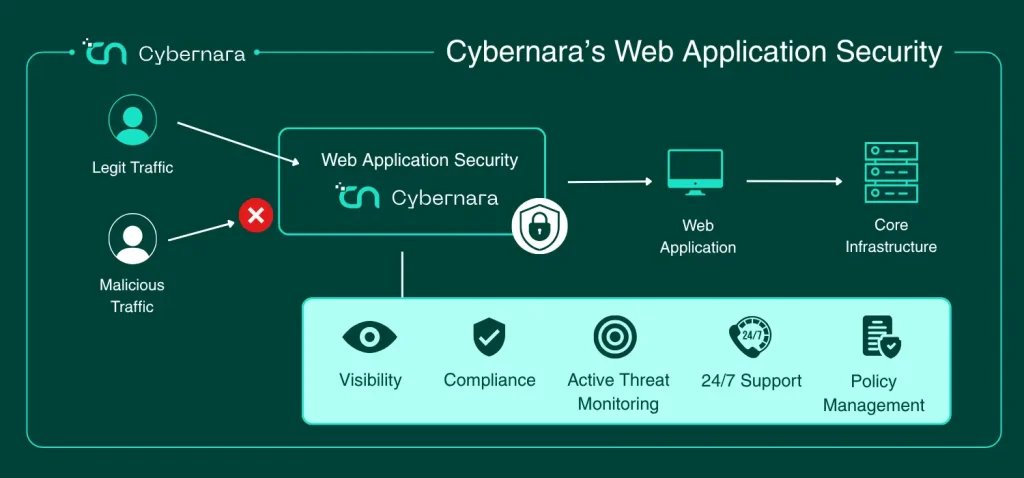
Cybernara’s Web Application Security
Every request that reaches your application isn’t equal — some build your business, others test its defenses. This layer separates legitimate traffic from malicious probes, shielding your web infrastructure through continuous monitoring, compliance alignment, and active threat response.
Clients Who Trust Us






What a Secure Web & Application Actually Looks Like
Authentication That Ends Sessions, Not Just Starts Them
Validated Code Paths
Hardened Interfaces
Monitored and Updated Components
Aligned Policies and Practice
If your security doesn’t look like this, you probably haven’t had the right partner yet.
The Cost of Postponing Web Security Investments
Postponing web security investments may reduce costs in the short term, but over time it increases operational risk, exposes critical systems, and makes recovery significantly more expensive. Security gaps rarely remain isolated. As websites, applications, and integrations grow, the impact of delayed protection becomes more difficult to control.
Increased Risk of Data Breaches
Unpatched vulnerabilities, weak authentication, and insecure web applications create opportunities for attackers to access sensitive customer, business, or operational data. A single breach can lead to financial loss, legal exposure, and reputational damage.
Higher Recovery and Remediation Costs
Fixing security issues after an incident is far more expensive than preventing them early. Emergency response, forensic investigations, downtime, legal requirements, and infrastructure recovery can quickly exceed the cost of proactive security investments.
Business Disruptions and Downtime
Web attacks such as ransomware, application compromise, or denial-of-service incidents can interrupt customer access and internal operations. Delays in securing systems increase the likelihood of unexpected outages and service instability.
Loss of Customer Trust
Customers expect secure and reliable digital experiences. Security incidents reduce confidence in the organization and can lead to lost business, reduced engagement, and long-term reputational harm.
Compliance and Regulatory Challenges
Delaying web security improvements can create gaps in compliance with industry standards and data protection regulations. This increases the risk of audit findings, penalties, and legal complications.
Growing Complexity and Technical Debt
As applications and environments expand, unresolved security weaknesses become harder to manage and more expensive to fix. Delayed investments often result in fragmented controls and reactive security practices.
Reduced Visibility Into Threats
Without modern monitoring, logging, and protection mechanisms, threats may remain undetected for extended periods. Organizations lose the ability to identify suspicious activity before it escalates into a larger incident.
Investing in web security early helps organizations reduce risk, maintain operational stability, and protect both business systems and customer trust. Proactive security is significantly less costly and disruptive than responding to preventable incidents after they occur.
Services Our Clients Trust Us With
Our Core Services
IT and Infrastructure Services
Cloud and Platform Services
Security and Compliance Services
Development, Data and AI Services
Protect Your Data, People & Business From Threat Attacks
Get Started With A Free Security Audit
FAQs
Will the assessment affect live users or cause downtime?
No. All testing is planned, read-only, and non-intrusive.
We perform vulnerability checks, simulations, and code reviews without touching your production workflows — ensuring zero disruption to customer access or operations.
Does Cybernara test both websites and APIs?
Yes. Our assessments include web portals, backend APIs, admin interfaces, and third-party integrations.
We validate how each layer handles authentication, authorization, and data exchange to ensure no component becomes a weak link.
Can you help with fixes after the report?
Absolutely. Cybernara doesn’t stop at identifying risks — we partner with your team to remediate them.
From patch verification and secure configuration to code-level guidance, our goal is to leave your applications stronger than we found them.