
Workplace Technology and Lifecycle Support
Ad-hoc IT vs Managed Workplace Technology
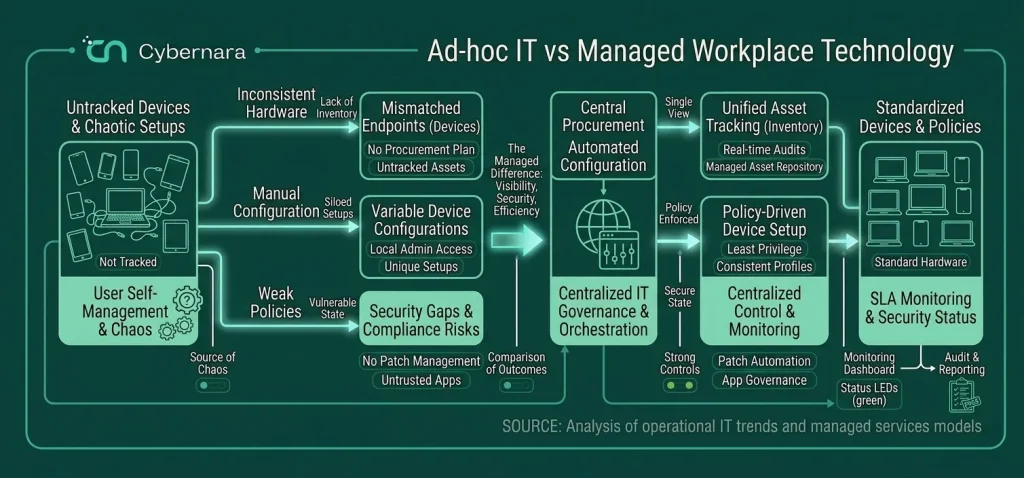
How Device and User Gaps Turn Into Daily Friction
Workplace issues rarely come from big failures. They come from small gaps between devices, users, and systems that slowly create friction in everyday work.
Inconsistent Device Setups Across Users
Different users end up with different configurations, software versions, and access levels. This creates confusion, slows collaboration, and makes support harder.
New Joiners Start With Delays
Devices aren’t ready, access is incomplete, or tools are missing. What should be a smooth onboarding experience turns into lost time and frustration.
Outdated Devices Affect Productivity
Aging laptops and unsupported systems struggle to keep up with modern workloads. Users face lag, crashes, and reduced efficiency throughout the day.
Access Doesn’t Match Roles Users either don’t have what they need or have more access than required. Both scenarios create delays, risks, and unnecessary back-and-forth.
Frequent Small Issues Interrupt Work
Login issues, software conflicts, and device glitches happen regularly. Individually small, but collectively they disrupt productivity.
No Standard Way to Handle Changes
Device upgrades, role changes, and replacements happen inconsistently. Without structure, every change becomes a manual effort.
Why Ad-Hoc Device Management Always Falls Short
Every Setup Becomes Different
No Visibility Into Device Health
Issues Are Fixed, Not Prevented
Security Gets Overlooked
Scaling Becomes Difficult
Support Becomes Unpredictable
Clients Who Trust Us







How Cybernara Standardizes and Supports Your Workplace Technology
Standardized Device Configurations
Streamlined Onboarding and Offboarding
Centralized Monitoring and Management
Lifecycle Tracking and Planning
Security and Compliance Alignment
Why Device Lifecycle Management and User Experience Matter
When workplace technology is not managed effectively, the impact is rarely immediate. Problems build gradually over time, affecting productivity, security, and overall business performance.
Productivity Declines Across Teams
Slow devices, recurring technical issues, and inefficient setups create daily disruptions for employees. Even small delays across multiple users can lead to significant productivity loss over time.
Downtime and Disruptions Increase
Without proper lifecycle planning, devices become unreliable and fail unexpectedly. Teams are then forced into reactive troubleshooting that interrupts normal operations.
Costs Continue to Rise
Emergency replacements, unplanned repairs, and inefficient device usage increase operational expenses. Instead of following a controlled strategy, spending becomes reactive and unpredictable.
Security Risks Grow Over Time
Outdated systems, unsupported devices, and inconsistent updates create security gaps that are easier for threats to exploit. These vulnerabilities increase risk across the organization.
User Experience Becomes Inconsistent
Employees struggle with unreliable devices and inconsistent configurations, leading to frustration and reduced efficiency. Over time, this impacts both morale and the quality of work.
Limited Visibility Leads to Reactive Decisions
Without proper lifecycle management, organizations lose visibility into device health, usage, and future requirements. This makes planning difficult and forces teams into reactive decision-making.
Services Our Clients Trust Us With
Our Core Services
IT and Infrastructure Services
Cloud and Platform Services
Security and Compliance Services
Development, Data and AI Services
Protect Your Data, People & Business From Threat Attacks
Get Started With A Free Security Audit
FAQs
What does lifecycle support actually cover?
It covers everything from device procurement and setup to maintenance, upgrades, and eventual replacement. The goal is to manage every stage so nothing falls through the cracks.
Who handles onboarding and offboarding of users?
Cybernara manages provisioning, device setup, access assignment, and deprovisioning. This ensures users are set up correctly from day one and securely removed when they leave.
What happens when devices fail or users face issues?
We put monitoring, support processes, and replacement workflows in place. Issues are handled quickly without disrupting productivity.
Is this only useful for large organizations?
No. Both small and large teams benefit. Smaller teams gain structured processes without needing internal IT, while larger organizations get consistency across users and locations.