
DPDP Readiness and Gap Assessment
A DPDP Readiness and Gap Assessment is a structured way to understand how your organisation handles personal data today, and how that compares to what the DPDP Act expects. Instead of starting with policies and paperwork, it focuses on real workflows. Where data is collected, where it is stored, who has access to it, and how it moves across systems and vendors.
The outcome is a clear view of what is working, what is missing, and what needs attention first, so you can fix gaps before they turn into audit issues, client escalations, or regulatory problems.

Download the DPDPA Guide
DPDPA can feel overwhelming when read as a legal document.
We simplified the Act, its obligations and penalties, into easy-to-understand guide for business team
DPDP Act FAQs for Businesses
Most businesses have the same questions about DPDPA. Does it apply to us? What about WhatsApp?
This PDF answers the most common, real-world questions in plain language.
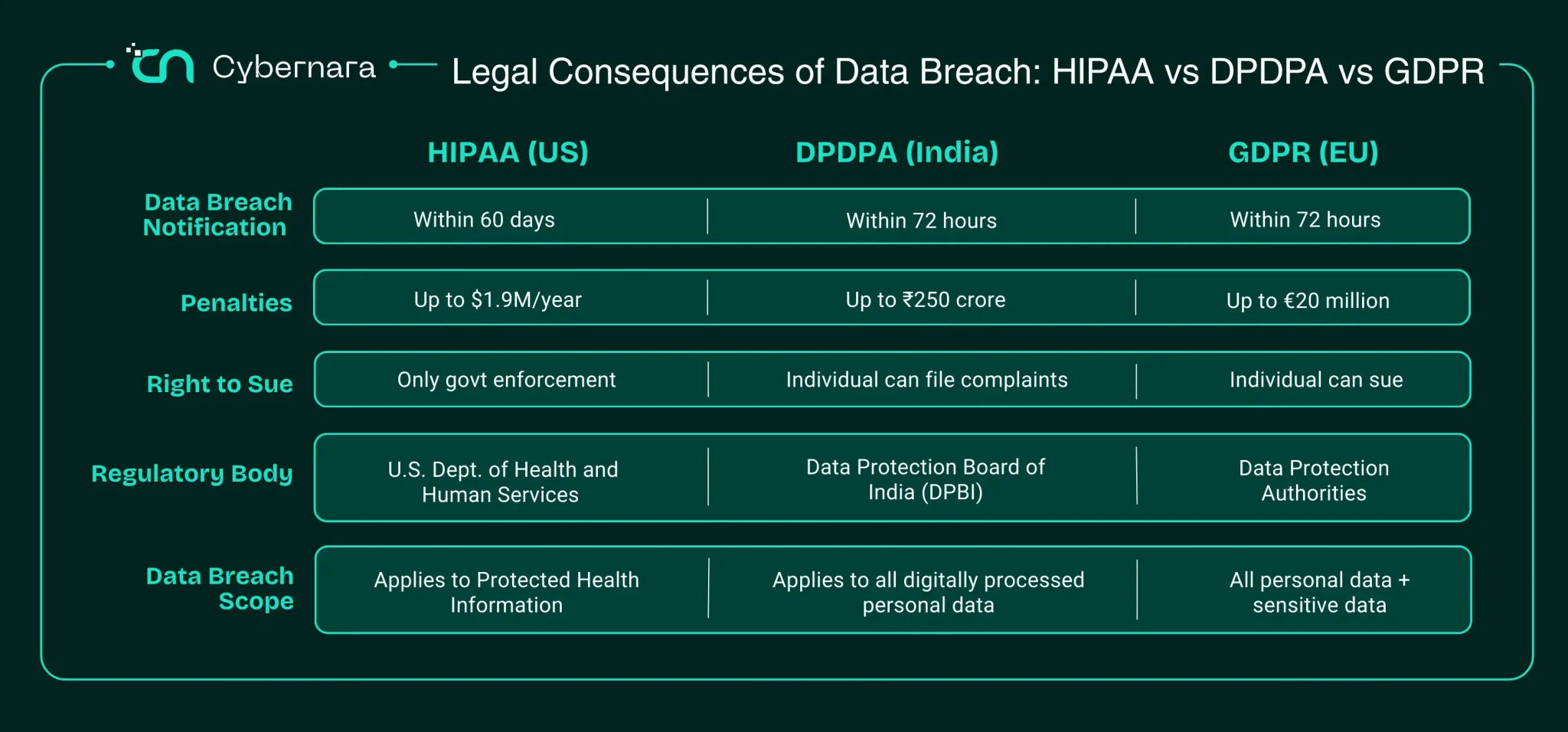
Legal Consequences of Data Breach: HIPAA vs DPDPA vs GDPR
Breach response is measured in hours, not weeks. DPDPA expects prompt intimation and detailed reporting within tight windows, similar to GDPR’s 72-hour regulator clock, while HIPAA has its own deadlines and reporting rules. This is why “being prepared” matters more than “having a policy.”
Common DPDP Readiness Gaps We Find
Most teams are not ignoring DPDP. They are just busy, and privacy usually gets handled in parts across multiple tools and people.
In readiness reviews, we keep seeing the same gaps come up, even in well-run companies.
Consent Exists, But It’s Not Useful
Many sites have a checkbox, but it doesn’t capture purpose properly or store proof cleanly. Later, no one can show what the user agreed to and when.
Consent Withdrawal Is Not Operational
People can “opt out” in theory, but there’s no real workflow to stop processing across CRM, email tools, support desk, and analytics. The request gets stuck between teams.
Forms Are Not Ready for Pan India
Consent and notices are often only in English. If your users are pan-India, you may need data collection notices and consent flows in 22 Indian languages so people actually understand what they are agreeing to.
Data Lives Outside the System of Record
Sales and support exports, spreadsheets, WhatsApp forwards, shared drives, email attachments. These copies become invisible, and deletion or access requests become impossible to execute properly.
Vendor Exposure Is Bigger Than Expected
CRMs, payroll tools, marketing platforms, analytics, chat tools, outsourced support. Vendors often process more personal data than teams realise, and oversight is usually informal.
A readiness assessment helps you identify the biggest risks first, assign ownership, and start improving control and proof step by step.
What Regulators Look For in a DPDP Audit
You Can Explain Your Data Lifecycle
They want to see that you know what personal data you collect, why you collect it, where it is stored, and how long you keep it. If you cannot explain this clearly, everything else becomes weak
Consent Is Clear, Purpose-Based, and Provable
It’s not enough to have a checkbox. They look for clear notice, consent linked to a purpose, and records that show when and how consent was captured.
Withdrawal Is As Easy As Giving Consent
This is where many companies fail. They look for a real workflow that stops processing across systems and records proof that withdrawal was honoured.
Vendors Are Not a Blind Spot
They look at how you manage third parties who process personal data for you. If vendors handle data and oversight is missing, your compliance posture is unstable.
These checkpoints cover the areas that are commonly reviewed under DPDP.
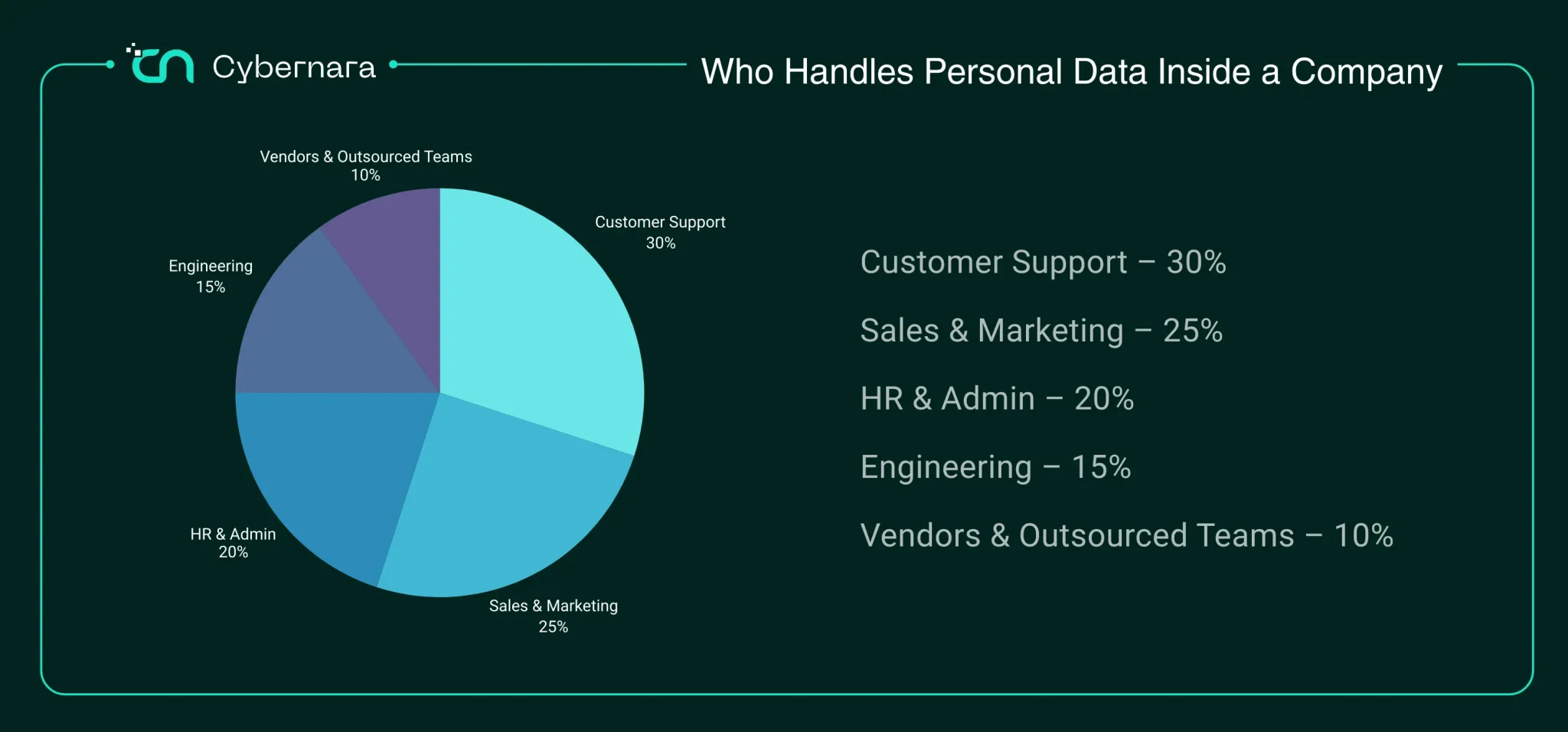
Who Handles Personal Data Inside a Company?
Personal data is not handled by one team. It moves daily through support, sales, HR, engineering, and vendors. DPDPA compliance only works when controls extend beyond IT into every function that touches data.
Clients Who Trust Us







What the First 7 Days Look Like
The first week is kept simple and lightweight. The goal is to understand how personal data moves through your business today, without slowing down your teams.
Identify Key Stakeholders
We finalise who needs to be involved from HR, support, marketing, IT, and product. This keeps ownership clear and avoids gaps later.
List Core Systems That Handle Personal Data
We create an initial list of tools like website forms, app databases, HR platforms, CRM, support desk, analytics, and cloud services.
Confirm Data Entry Points
We confirm where data is being collected today, such as signup forms, lead forms, onboarding, support tickets, payments, and integrations.
Check Request Handling Readiness
We check whether access, correction, and deletion requests can be handled end to end with simple tracking and closure proof.
Check Retention and Deletion Basics
We check whether retention is defined anywhere and whether deletion is operational or assumed.
Check Incident Readiness for Personal Data
We check whether incident response can identify what personal data was affected and how impact would be confirmed quickly.
In most cases, the first week is enough to remove confusion and create direction. From there, the work becomes much easier because scope and ownership are finally clear
Deliverables You Receive
Gap Matrix Mapped to DPDP Requirements
A mapped view of which DPDP expectations are met, partially met, or missing. This reduces ambiguity and supports audit and procurement conversations.
Risk-Ranked Remediation Roadmap
A practical plan to close gaps in phases based on risk and effort. This avoids “everything at once” programs that stall.
High-Level Data Processing and System Inventory
A high-level view of where personal data sits and what processing occurs. This helps teams align on scope and ownership quickly.
Quick Wins That Reduce Immediate Exposure
Fast actions that improve control and evidence without heavy projects. These are ideal for early procurement needs and near-term risk reduction.
And a clear list of what proof is missing for consent, safeguards, requests, and incidents. This is where compliance usually breaks during real scrutiny.
You can use these outputs to move into remediation with a clear plan and clear ownership.
FAQs
Will this satisfy enterprise client questionnaires?
It significantly improves your ability to answer confidently with evidence. It also highlights what you should not claim yet.
Does this include legal sign-off?
This service focuses on operational readiness and controls. Legal review can be done alongside, or after, depending on your preference.
Will this satisfy enterprise client questionnaires?
It significantly improves your ability to answer confidently with evidence. It also highlights what you should not claim yet.
Will you assess our vendors too?
Yes. Vendor and processor exposure is a core part of readiness. Most DPDP risk sits in third-party processing.
Services Our Clients Trust Us With
Our Core Services
IT and Infrastructure Services
Cloud and Platform Services
Security and Compliance Services
Development, Data and AI Services
Making Teams Compliant Since 2019
Get Started With a DPDP Readiness Check
Got Data?
Got Infra?
Got Cloud?
We protect it all.
Security that works actively in the background.
Cloud • Infrastructure • Platforms • APIs • Networks • Data • Applications • Endpoints • Identities • Workloads • Logs • Access • Integrations • Storage • Environments • Logs