
Server and Network Management
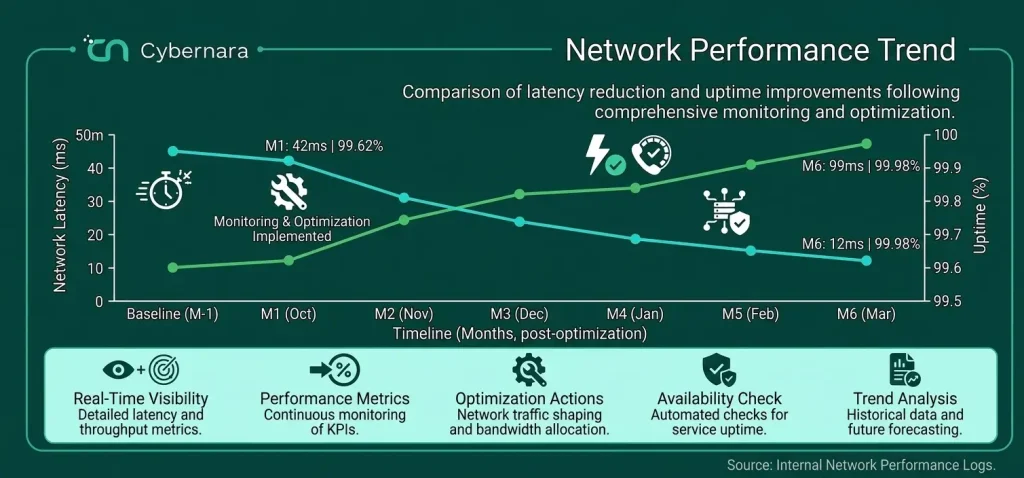
Network Perfomance Trend
Where Server and Network Management Actually Impacts Your Business
Server and network management matters because your business doesn’t run on tools alone it runs on the systems quietly supporting them. When those systems are unstable or poorly managed, every department feels the impact, often before IT even notices.
Core Business Applications Stay Usable
Your ERP, CRM, internal tools, and databases all depend on stable servers and reliable network paths. When infrastructure is properly managed, these systems stay fast, accessible, and consistent for your teams.
User Experience Remains Consistent
Slow logins, dropped connections, and random access issues frustrate employees and reduce productivity. Good management ensures users don’t have to think about the infrastructure at all.
Remote and Hybrid Work Doesn’t Break
VPNs, cloud access, and remote connectivity rely heavily on network stability and proper configuration. Without active management, remote work becomes unreliable and unpredictable.
Data Moves Without Friction
File transfers, backups, integrations, and API communications depend on network performance. A well-managed environment ensures data flows smoothly between systems.
Security Controls Actually Function
Firewalls, segmentation, and access controls only work if they are correctly configured and maintained. Infrastructure management ensures these controls don’t silently fail.
Downtime Doesn’t Interrupt Operations
Even short outages can disrupt workflows, delay decisions, and impact revenue. Proactive monitoring and maintenance reduce the chances of unexpected downtime.
How Cybernara Keeps Your Infrastructure Predictable
Continuous Monitoring, Not Occasional Checks
Baseline-Driven Management
Structured Patch and Update Cycles
Configuration Control and Standardization
Clear Ownership and Accountability
Regular Reviews and Improvements
Clients Who Trust Us







Why Generic IT Management Misses Critical Infrastructure Risks
Focus on Tickets, Not Systems
Lack of Deep Infrastructure Visibility
Inconsistent Configurations Across Systems
Delayed Patching and Updates
No Root Cause Analysis
The Consequences of Poor Infrastructure Accountability
Infrastructure rarely fails all at once. Most problems develop gradually as small issues build up over time, eventually leading to outages, security risks, or performance problems.
Small Problems Escalate Over Time
Warning signs such as failed backups, unusual system logs, or recurring alerts are often ignored until they become serious incidents. What starts as a minor issue can quickly grow into a major disruption.
Configuration Drift Creates Instability
Systems change over time without proper documentation or standardization. Eventually, teams lose visibility into how infrastructure is configured, making troubleshooting and maintenance more difficult.
Performance Gradually Declines
Servers become overloaded, networks experience congestion, and applications respond more slowly. The impact may appear gradual at first, but it eventually affects users across the business.
Security Weaknesses Remain Exposed
Outdated systems, open ports, and weak configurations often remain unnoticed when there is no clear ownership or continuous monitoring. These gaps increase security risks over time.
Incident Response Becomes Disorganized
When failures occur, teams struggle to identify what changed or what caused the issue. Limited visibility and poor documentation slow down recovery efforts and increase downtime.
Operations Become Unpredictable
Systems begin behaving inconsistently, working normally one day and failing the next. This unpredictability affects productivity, disrupts workflows, and reduces trust in the environment.
Services Our Clients Trust Us With
Our Core Services
IT and Infrastructure Services
Cloud and Platform Services
Security and Compliance Services
Development, Data and AI Services
Protect Your Data, People & Business From Threat Attacks
Get Started With A Free Security Audit
FAQs
Who handles day-to-day server and network management?
Cybernara manages monitoring, maintenance, patching, performance tuning, and issue resolution. Your internal team stays informed, but we handle the operational workload.
Do we need to replace our existing infrastructure?
No. We work with what you already have. The focus is on optimizing, securing, and properly managing your current setup before recommending any major changes.
What happens if something breaks or goes down?
We detect and respond quickly through continuous monitoring and alerting. Most issues are identified and resolved before they impact users, and critical incidents are handled with clear escalation and response processes.
How do you prevent recurring issues or downtime?
We don’t just fix problems we identify root causes. By improving configurations, patching regularly, and monitoring trends, we reduce repeat issues over time.