
VAPT Services UAE
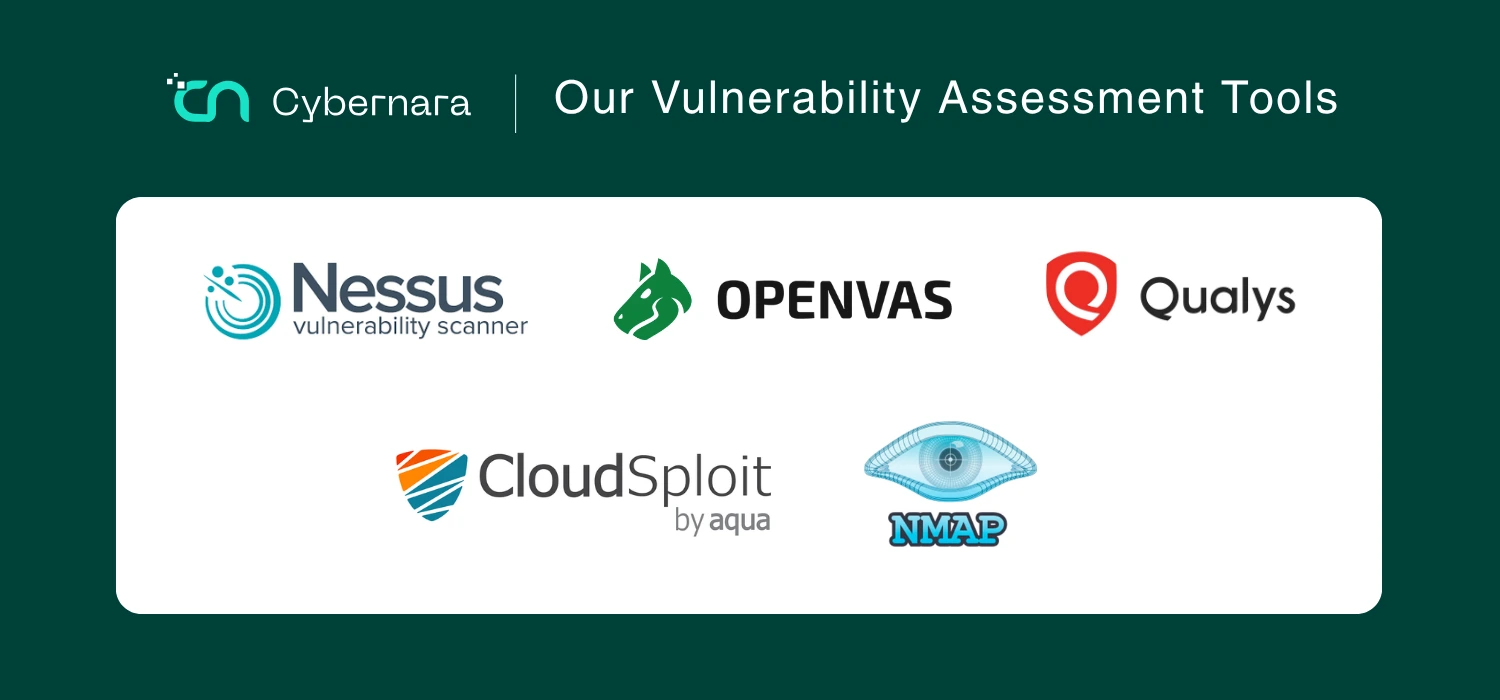
Our Vulnerability Assessment Tools
The tools we rely on help us scan deep, verify accurately, and eliminate blind spots across networks, applications, and cloud systems.
What Does the Vulnerability Assessment Part of VAPT Include?
Before we can protect your systems, we need to understand what’s weak inside them. A Vulnerability Assessment lets us map your digital landscape, uncover weak configurations, and reveal where attackers could get in — quietly, easily, and often unnoticed.
This includes:
Network and Infrastructure Review
We scan and analyze internal and external networks to spot open ports, weak firewalls, or services that shouldn’t be visible to the internet.
Cloud Security Evaluation
From identity roles to storage permissions, every setting is reviewed to catch misconfigurations that can expose critical assets.
Application and API Testing
Your web and API layers are checked for outdated code, unpatched libraries, and unsafe integrations that could be exploited remotely.
Patch and Version Verification
We trace which systems run on outdated versions or missing security updates — closing the gaps before attackers find them.
Risk Prioritization and Recommendations
Every issue is ranked by impact and likelihood so you know what demands immediate attention and what can wait for your next cycle.
After the Vulnerability Assessment report, we often find areas that clearly need to be secured and we fix those. But there are also parts marked as “secure.” How secure, though? That’s what we figure out through Penetration Testing.
What Does the Penetration Testing Part of VAPT Include in UAE?
Network Penetration Testing
Web and Application Exploitation
Privilege Escalation and Lateral Movement
Cloud and Infrastructure Exploitation
Detailed Exploit Report and Recommendations
Social Engineering and Access Testing
Penetration Testing helps confirm whether your existing security controls work as expected and where they don’t.
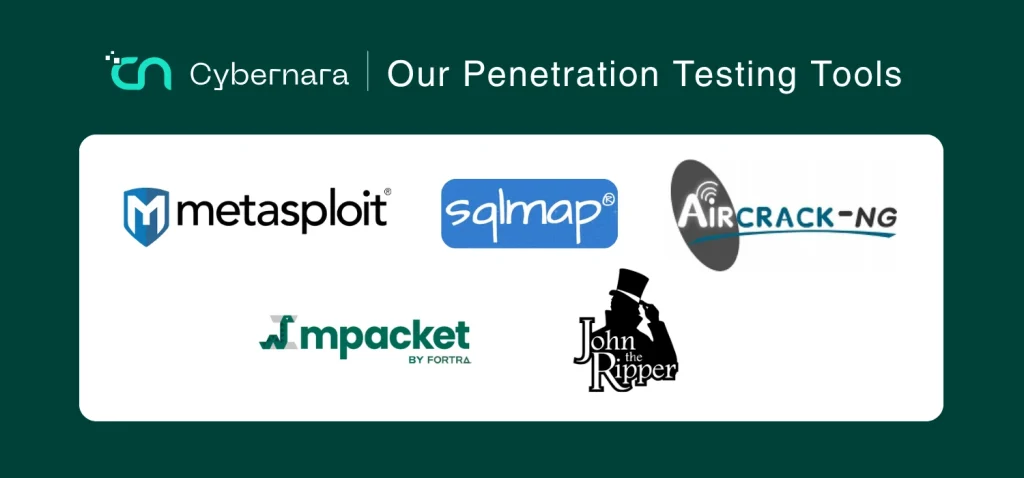
Our Penetration Testing Tools
Common Gaps We Find During VAPT
Unrestricted Access Paths
Forgotten Test Environments
Weak Authentication Logic
Default or Shared Credentials
Unsecured APIs
Missing Logging and Alerts
Overlooked Internal Dependencies
Why VAPT Gets Ignored By UAE Companies
Many organizations only think about VAPT after something goes wrong. The truth is, it’s not a lack of awareness — it’s a mix of assumptions, delays, and misplaced confidence that make teams skip it until it’s too late.
Assuming Existing Tools Are Enough
Firewalls, antiviruses, and endpoint protection create a false sense of safety. They block known threats but can’t expose what’s already vulnerable inside.
Budget and Priority Conflicts
VAPT often gets pushed down the list because it’s not tied to immediate revenue — until the cost of an incident proves otherwise.
Fear of Disruption
Teams worry that testing might break production systems. In reality, well-planned VAPT is non-intrusive and completely safe when coordinated properly.
Overreliance on Compliance
Some organizations treat passing audits as being secure. Compliance checks ensure documentation — not actual resilience.
Limited Internal Expertise
Without in-house security specialists, many companies don’t know where to start or how deep testing should go.
Reactive Security Culture
Security is often treated as a response, not a routine. VAPT feels optional — until a breach makes it mandatory.
Most companies don’t skip VAPT because they don’t care — they skip it because they think they’re already safe.
Services Our Clients Trust Us With
Protect Your Data, People & Business From Threat Attacks
Get Started With A Free Security Audit
FAQs
How often should a VAPT be performed?
Ideally, every six months or after any major change — like launching a new application, migrating to cloud, or adding new infrastructure. Regular testing keeps your protection aligned with evolving threats.
Will a VAPT cause downtime or affect live systems?
No. When planned properly, VAPT is safe and non-disruptive. All tests are run in controlled windows, using read-only or simulated methods that don’t interfere with production.
What do I receive after a VAPT is completed?
You’ll get a detailed report showing vulnerabilities, validated exploits, and prioritized recommendations. Each finding includes context, risk level, and clear steps to fix it.
Is VAPT only for large organizations?
Not at all. Attackers don’t target size — they target opportunity. Smaller companies are often hit harder because their gaps go unnoticed for longer. VAPT helps level that field.
Can we do VAPT with our in-house IT team?
Internal teams can handle basic scans, but ethical exploitation and impact validation need external specialists. Independent testers provide a fresh perspective and eliminate bias.