
Virtual DPO as a Service
Virtual DPO as a Service gives businesses access to ongoing privacy guidance without the need to hire a full-time internal role. It helps organisations manage DPDP responsibilities through practical support that fits into daily operations. The focus is on helping teams handle data-related decisions with clarity as the business grows.
Support is provided across processes, teams, and vendors so privacy work stays consistent over time. This allows companies to move forward confidently while keeping data practices organised and manageable.
Download the DPDPA Guide
DPDPA can feel overwhelming when read as a legal document.
We simplified the Act, its obligations and penalties, into easy-to-understand guide for business team
DPDP Act FAQs for Businesses
Most businesses have the same questions about DPDPA. Does it apply to us? What about WhatsApp?
This PDF answers the most common, real-world questions in plain language.
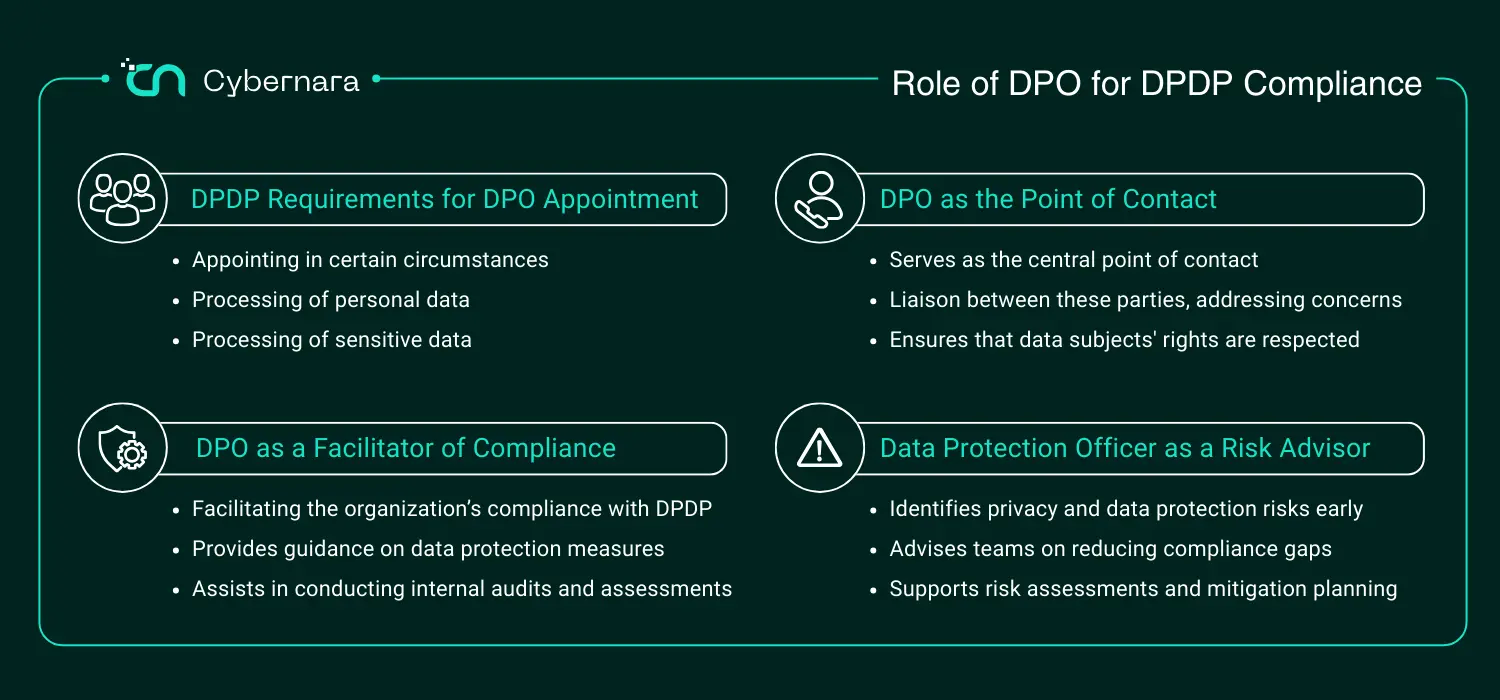
Role of DPO for DPDP Compliance
A DPO helps organisations manage privacy responsibilities by guiding teams, supporting compliance efforts, and acting as a clear point of contact for data protection matters.
Why a DPO Is Needed for Companies Operating in India
As businesses grow, personal data starts flowing through multiple teams, tools, and vendors. Customer information, employee records, marketing data, and operational systems all become connected. Without clear ownership, privacy responsibilities often get handled in different ways across the organisation. A DPO helps bring clarity and consistency so teams know how data should be managed in daily work.
Coordinating Privacy Across Departments
Different teams collect and use data for different purposes. A DPO helps align these activities so processes remain clear and consistent across operations, marketing, HR, and IT.
Supporting Practical Decision-Making
Teams regularly face questions about data usage, sharing, or retention. A DPO provides guidance so decisions are made confidently without slowing down business activities.
Managing Growing Compliance Expectations
As regulations and customer expectations evolve, businesses need someone to keep track of changes. A DPO helps organisations stay updated and adapt processes over time.
Handling Requests and Internal Queries
Customer or employee requests related to data can arise at any time. A DPO helps establish simple internal pathways so these requests are handled smoothly.
Working With Vendors and External Partners
Many businesses rely on third-party tools and service providers. A DPO helps review how these relationships handle personal data and keeps responsibilities clearer.
For companies operating in India, a DPO helps turn privacy responsibilities into clear everyday practices. The role supports teams by creating clarity, consistency, and a steady point of guidance as the business evolves.
What Daily Operations Does a DPO Help Businesses With
Reviewing Data Collection Practices
Teams often collect data through forms, apps, or communication channels that evolve over time. A DPO helps review these touchpoints so they remain clear and consistent with current practices.
Guiding Marketing and Communication Activities
Marketing teams regularly run campaigns using email, WhatsApp, or digital ads. A DPO helps ensure consent choices and communication practices remain aligned with how data is being used.
Supporting HR and Employee Data Handling
Employee information moves through recruitment, payroll, and internal systems. A DPO helps teams manage this data with clearer processes and practical safeguards.
Improving Data Access and Sharing Practices
Different teams may access or share data differently based on daily needs. A DPO helps establish simple guidelines so access remains appropriate and organised.
A DPO’s role in daily operations is to provide steady guidance where data decisions happen most often. This helps businesses build consistency without interrupting normal work.
Clients Who Trust Us







Does a DPO Represent Your Company
Many businesses wonder whether a DPO acts as an official representative or decision-maker for the organisation. In practice, a DPO supports the company by guiding teams and helping them manage privacy responsibilities clearly. The role is focused on coordination, advice, and ongoing oversight rather than replacing internal decision-making. This helps businesses build clarity while keeping ownership within the organisation.
Supporting Internal Decision-Making
Business decisions remain with leadership and internal teams. A DPO helps by sharing practical guidance so choices around data handling are made with better visibility.
Helping Teams Stay Aligned
Different departments may interpret privacy practices differently. A DPO helps align teams so processes remain consistent across the organisation.
Coordinating Communication Around Privacy
When privacy-related questions come up internally or externally, a DPO helps organise responses and keeps communication clear and structured.
Reviewing Processes Without Controlling Operations
A DPO reviews how data is handled and suggests improvements where needed. The aim is to support smoother operations, not to take over workflows.
Bridging Business and Compliance Conversations
Sometimes operational goals and privacy responsibilities need balancing. A DPO helps translate these needs into practical steps that teams can apply.
Building Trust Through Consistent Practices
Having a clear privacy contact helps teams and stakeholders know where to go for guidance. This creates confidence as the organisation grows.
A DPO supports the company by guiding and coordinating rather than representing or replacing internal leadership. The role helps businesses move forward with clarity while keeping decision-making within the organisation.
Getting Started with a Virtual DPO for Your Business
Understanding Current Operations
The first step is getting familiar with how teams collect, store, and use personal data. This helps build a clear picture of existing workflows and responsibilities.
Identifying Key Privacy Touchpoints
Every business has points where personal data is handled most often, such as customer onboarding, HR processes, or vendor management. Identifying these areas helps set the right priorities.
Setting Clear Communication Channels
A Virtual DPO works best when teams know how and when to reach out for guidance. Simple communication channels help keep interactions smooth and consistent.
Defining Roles and Responsibilities
Teams continue managing their own operations while the Virtual DPO provides guidance and coordination. Clear role definitions help avoid confusion from the start.
Introducing Regular Check-Ins
Periodic reviews or touchpoints help track progress and address new questions. This keeps privacy practices aligned as operations evolve.
With steady guidance and practical planning, privacy responsibilities become easier to manage as part of everyday business operations.
Services Our Clients Trust Us With
FAQs
Do small or mid-sized businesses need a Virtual DPO?
Many growing businesses handle personal data across multiple tools and teams. A Virtual DPO helps bring structure and clarity without adding permanent overhead, making it a practical option for organisations of different sizes.
Will a Virtual DPO replace our internal teams?
No. Internal teams continue managing their daily operations. The Virtual DPO supports them by providing guidance, helping coordinate efforts, and offering clarity when data-related decisions arise.
How often do we interact with a Virtual DPO?
Interaction typically happens through regular check-ins, reviews, and ongoing support when questions come up. The level of involvement can be adjusted based on how the business operates.
Making Teams Compliant Since 2019
Get Started With a DPDP Readiness Check
Got Data?
Got Infra?
Got Cloud?
We protect it all.
Security that works actively in the background.
Cloud • Infrastructure • Platforms • APIs • Networks • Data • Applications • Endpoints • Identities • Workloads • Logs • Access • Integrations • Storage • Environments • Logs