
Web & Application Security Assessment India
Top Vulnerability Categories Detected During Assessments
Your website and apps are the front line of your digital business — and also the most targeted. This assessment uncovers vulnerabilities across your code, APIs, and configurations through real-world testing, ensuring attackers can’t turn small bugs into big breaches.
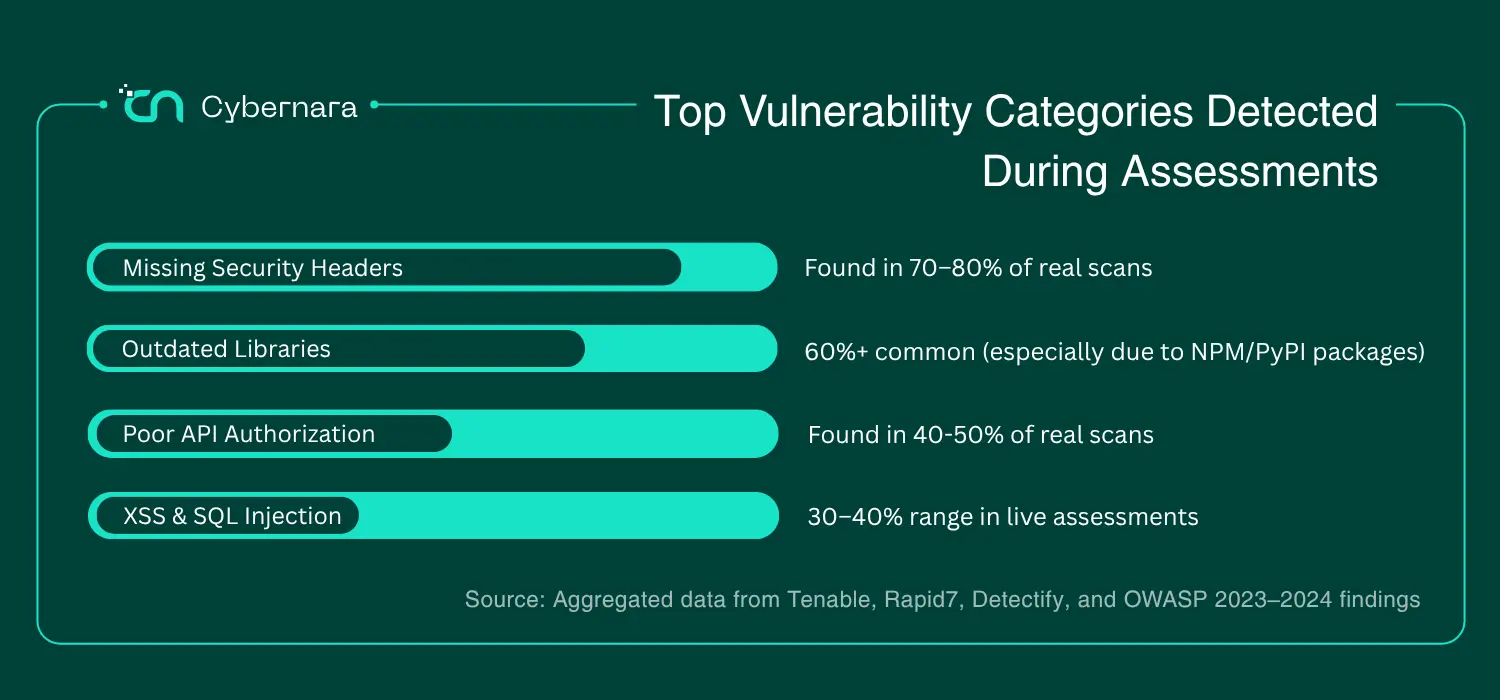
A List of What We Examine During the Assessment
Web & Application Security Assessments go beyond vulnerability scans, they trace how applications behave, interact, and protect data in real conditions. They focus on what slips through in busy deployment cycles and what quietly erodes defenses over time.
Here’s what they often bring to light:
Access and Authentication Logic
Where user verification fails — from weak password rules to tokens that never expire.
These small oversights often open large doors.
Input and Data Validation
Code that trusts what users send it.
Unchecked inputs turn into injection flaws, data leaks, and corrupted sessions.
API and Integration Controls
Where internal and third-party systems meet but don’t verify each other’s identity.
APIs built for speed often trade away security consistency.
Configuration and Header Management
Missing CSP or HSTS headers, open admin panels, or default settings left unchanged.
Most breaches start not from code but from configuration.
Dependency Hygiene
Outdated libraries or untracked plugins that quietly introduce known exploits.
Security depends as much on what you build as on what you reuse.
Common Vulnerabilities We Still See in 2025 For Our Indian Clients
Missing Security Headers
Outdated Components
Weak API Authorization
Injection and Input Flaws
Misconfigured Cloud and Certificates
These findings don’t signal carelessness, they reflect how quickly digital ecosystems evolve and how slowly maintenance catches up.
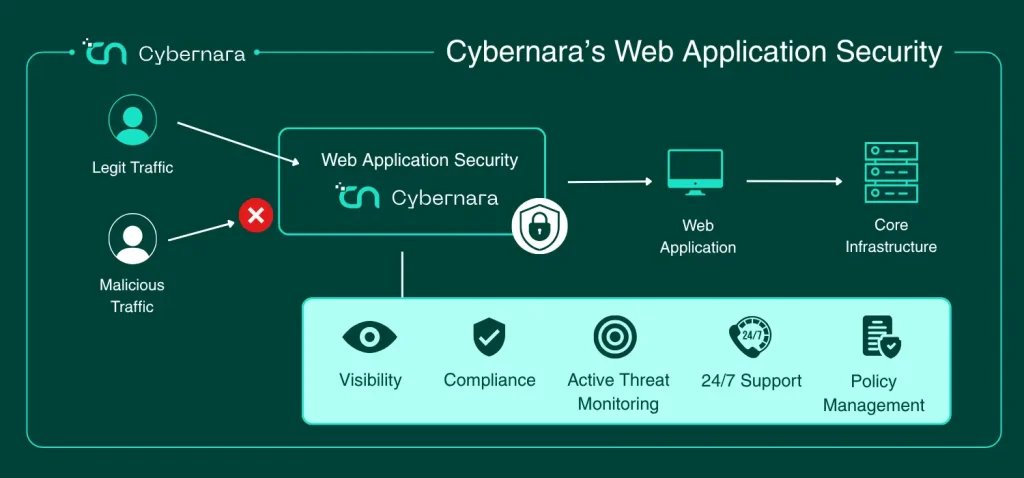
Cybernara’s Web Application Security
Every request that reaches your application isn’t equal — some build your business, others test its defenses. This layer separates legitimate traffic from malicious probes, shielding your web infrastructure through continuous monitoring, compliance alignment, and active threat response.
Clients Who Trust Us







What a Secure Web & Application Actually Looks Like
Authentication That Ends Sessions, Not Just Starts Them
Validated Code Paths
Hardened Interfaces
Monitored and Updated Components
Aligned Policies and Practice
If your security doesn’t look like this, you probably haven’t had the right partner yet.
Why Organizations in India Delay Web Security (and Why It Costs More Later)
Web security is rarely ignored, it’s postponed. Teams wait for the next release, the next budget cycle, or the next incident to make it a priority. What starts as a timing issue often becomes a cost issue.
The Comfort of “Nothing’s Broken”
When systems appear to run smoothly, security feels optional.
But vulnerabilities grow quietly in the background, and fixing them after an incident costs far more than preventing them.
The Myth of One-Time Fixes
Many organizations treat security as a project, not a process.
Once a test or audit is done, they assume safety until the next compliance deadline — missing the fact that every update, plugin, or new API changes the risk map.
Budget vs. Breach Math
Security spending is visible; breaches are invisible until they’re not.
A delayed patch or outdated certificate may save a few hours now but can cost weeks of downtime, data loss, and trust later.
The Human Factor
Most delays aren’t negligence — they’re overload.
Teams juggle features, timelines, and user demands, pushing security to “after launch.” The result: exposure by convenience.
Delaying web security doesn’t save time or money — it defers both to a moment when the cost is higher and the control is gone.
Services Our Clients Trust Us With
Protect Your Data, People & Business From Threat Attacks
Get Started With A Free Security Audit
FAQs
Will the assessment affect live users or cause downtime?
No. All testing is planned, read-only, and non-intrusive.
We perform vulnerability checks, simulations, and code reviews without touching your production workflows — ensuring zero disruption to customer access or operations.
Does Cybernara test both websites and APIs?
Yes. Our assessments include web portals, backend APIs, admin interfaces, and third-party integrations.
We validate how each layer handles authentication, authorization, and data exchange to ensure no component becomes a weak link.
Can you help with fixes after the report?
Absolutely. Cybernara doesn’t stop at identifying risks — we partner with your team to remediate them.
From patch verification and secure configuration to code-level guidance, our goal is to leave your applications stronger than we found them.